We Thought We Were Teaching Branding. Turns Out, We Were Informing Identity.
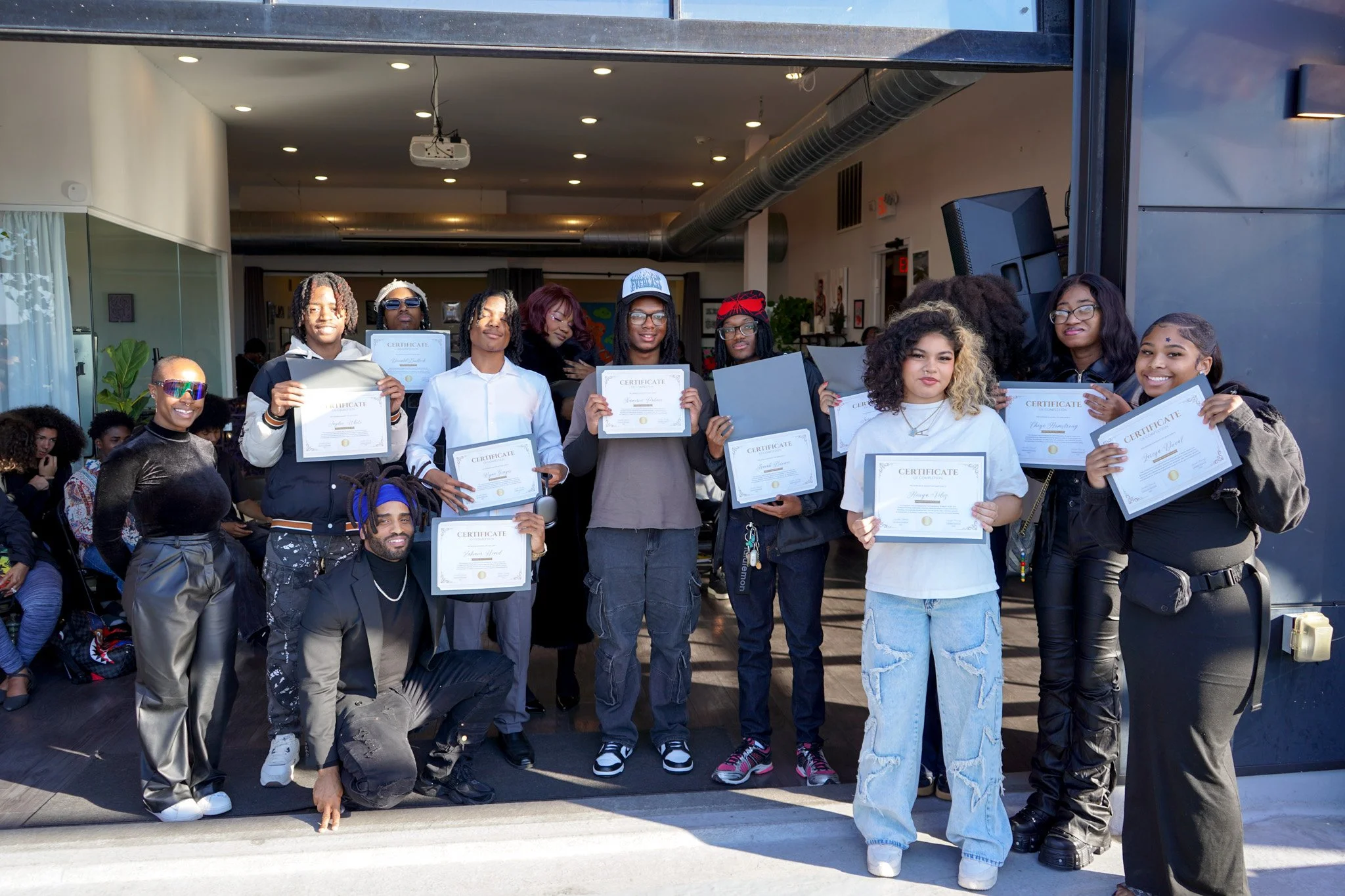
2025 Graduation
Our recent evaluation found that FamFrequency Productions is teaching more than music production and entrepreneurship, —we're helping young people figure out who they are.
I’ll explain..
The Easy Stuff to Measure (We already knew this)
Thanks to the Anti-Violence Community Partnership Grants we received through the Philadelphia Office of Public Safety, FamFrequency Productions (FFP) was able to work with Dr. Sara Solomon to conduct a focus group feedback session with the student-artists (SA) in our program. Dr Solomon sat down with eight SAs from different cohorts to understand what the program actually meant to them. FFP staff left the room so the conversation could be candid and transparent.
Once Dr Solomon completed the focus group, Lanisha and I reviewed the transcript. We read about the skills they'd learned—music production, audio engineering, budgeting, creative collaborations, stage presence, etc. One SA said they went from hating their beats to sharing them regularly on youtube. Another beamed about how they started recording artists and mixing vocals for extra cash. One described performing publicly for the first time after years of rap battling on Discord and the back of the school bus, finally seeing their "little hobby" as an actual career path.
We expected SAs to say this, because this skill building is a pillar of our programming.
PLOT TWIST
But then it got interesting,
"It's about figuring out who you are—whether you're an artist or a producer—and defining what makes you unique. Why do you do what you do? What's your purpose? It's basically brand identification skills. Going through the program really helped me know myself more." (FamFrequency Productions, Youth Impact Report, p 1)
Now this was a lightbulb moment.
When we developed the branding unit in our curriculum, our goal was to teach marketing - how to find your audience, your clientele, your collaborators, and how to stand out in a crowded industry.
What we didn't realize is that asking a human being "what makes you unique?" isn't just an external branding exercise. It's an identity question. And for adolescents navigating the messy, high-stakes work of figuring out who they are, that question matters a lot more than we gave it credit for.
Why Identity Work Matters for Adolescents
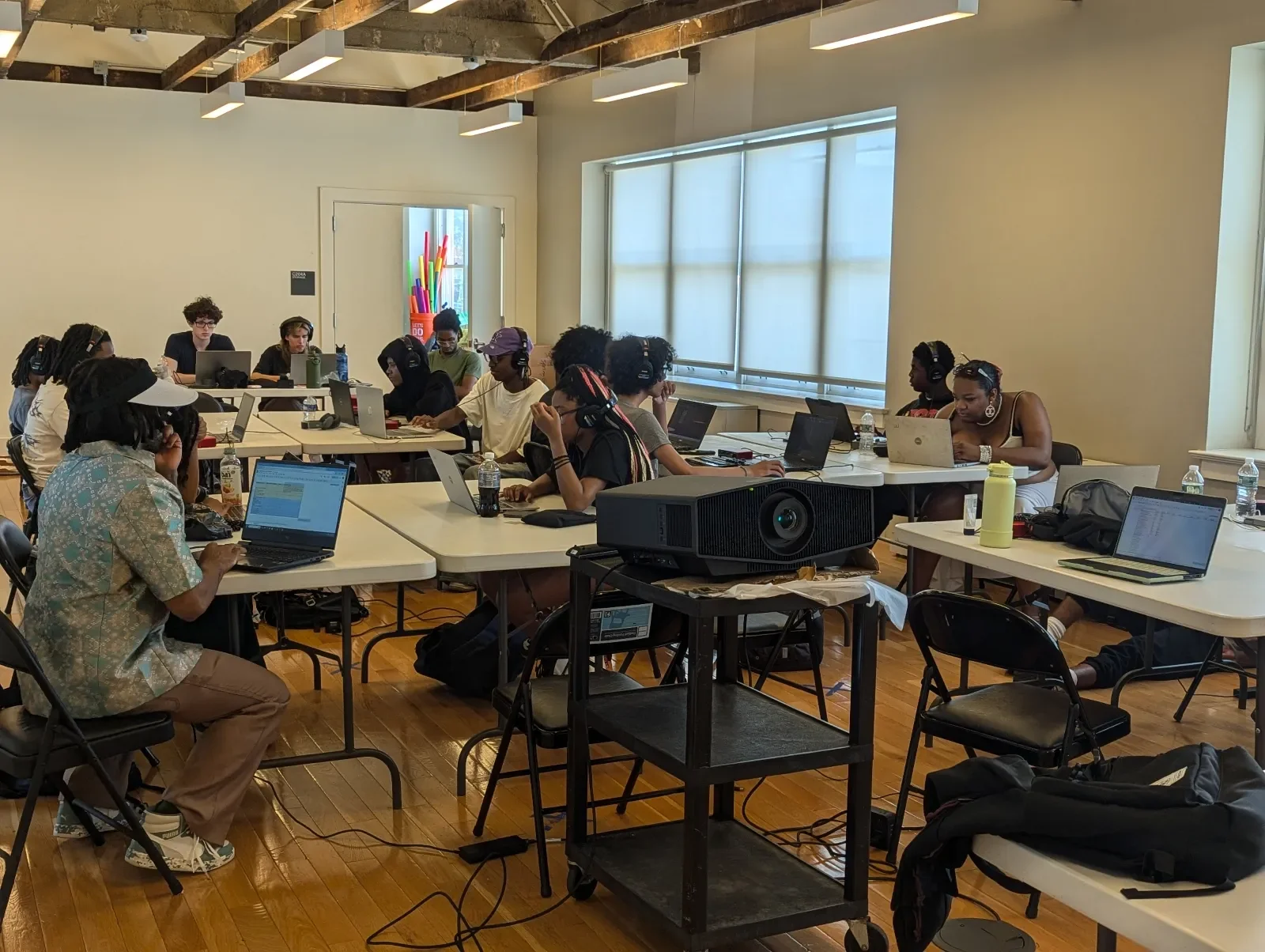
Summer Accelerator 2025
When you become a teenager, your biggest job is figuring out who you are. Who you are might feel like it changes depending on where you are - basketball practice, the dinner table, in science class, etc. Researcher Erik Erikson called this "identity vs. role confusion"—basically, trying to put together all the different pieces of yourself to understand the real you.
More recent research shows that creative identity development—the process of seeing yourself as a creator, an artist, someone with a distinct voice—is especially powerful during your teenage years. A 2023 study in the Journal of Adolescent Research found that youth who engage in sustained creative identity exploration report higher levels of self-efficacy, purpose, and resilience compared to peers who don't have these opportunities (Covarrubias & Fryberg, 2023).
Identity clarity in adolescence predicts better mental health outcomes, stronger academic engagement, and more adaptive career decision-making in early adulthood (Schwartz et al., 2022).
At FamFrequency Productions, we're not asking kids to “explore their interests in the abstract”. We're asking them to make real decisions—about their sound, their aesthetic, their artistic persona—and then we're giving them the opportunities to live into those decisions. They have to be intentional about what they put out because they are thinking in terms of audience and target audience. As one SA put it, the program "didn't force me, but it pushed me to be who I am—and to understand why that matters."
What This Looks Like in Practice
Our student-artists didn't talk about identity in the abstract. They described concrete changes in how they saw themselves.
“The program helped me realize [my creativity] could be so much more [than a hobby]."
"Before the program, I was nervous to do music. I didn't claim music as like, oh yeah, I'm an artist… Once I joined the program, I kind of accepted it."
"You can't copy somebody else, because you'll always end up chasing what they're doing."
They aren’t creating a false persona for likes and follows. They're building a sense of self that feels authentic, intentional, and theirs. They're learning that being true to yourself is a strategic advantage and a source of personal stability.
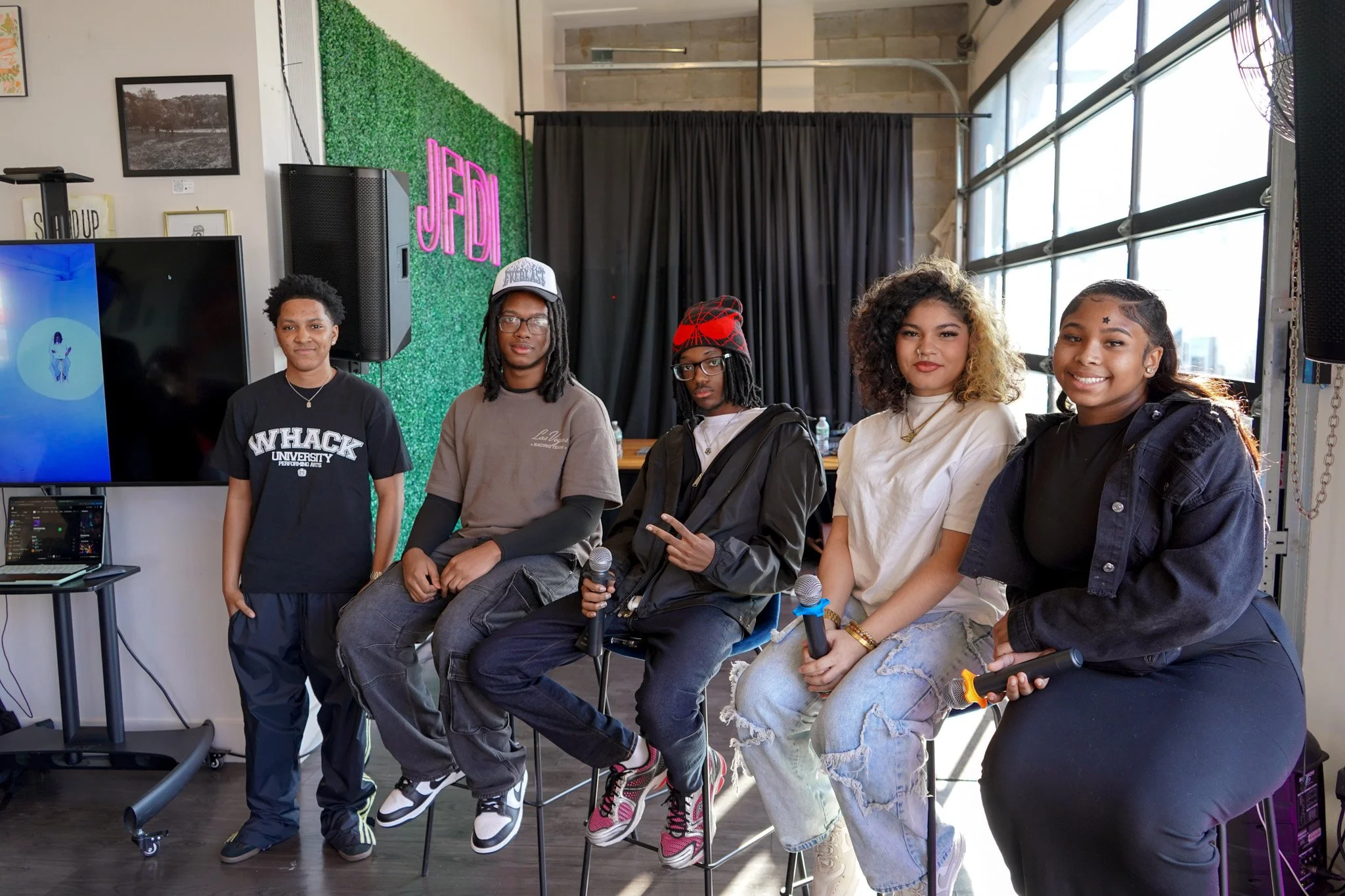
2025 Graduation: Cassidy, Kameron, Isaiah, Aniya, Lareya (pictured left to right)
The Harder-to-Measure Stuff
Beyond identity work, the evaluation revealed outcomes that don't fit neatly into a logic model but are essential for adolescents:
Mental and emotional well-being: Participants described FamFrequency as a stabilizing force during chaotic periods—family stress, financial strain, school pressure. Our mentors noticed when something was wrong and helped youth "stay consistent" and "focus on the music, not the outside."
An inclusive, non-judgemental culture: FFP created what they called a "hangout space" where constructive criticism is expected, respected, and used. Student-artists learned to take feedback without defensiveness—a skill that transfers far beyond music.
Belief from adults who see potential: Our instructors were described as people who "saw the potential in us" and "taught us like we were adults." That belief translated into young people taking creative risks they never would have tried on their own.
So, What Next?
We learned that the technical skills we teach are important. The career exposure is important. But the identity work—the space we create for young people to ask and answer "who am I?" and "why does that matter?"—might be the most critical thing we do for the youth we serve.
We will be intentional to build more of our programming around it. We're deepening our focus on identity development through expanded branding workshops and one-on-one coaching. We're creating sustained alumni programming so this work doesn't end when the cohort does.
With gratitude,
Jonathan Edwards
Co-Founder & CEO, FamFrequency Productions
References
Covarrubias, R., & Fryberg, S. A. (2023). Creative identity development and well-being in adolescence. Journal of Adolescent Research, 38(4), 521-548.
Schwartz, S. J., Forthun, L. F., Ravert, R. D., Zamboanga, B. L., Umaña-Taylor, A. J., Filton, B. J., ... & Hudson, M. (2022). Identity consolidation and health in emerging adulthood. Emerging Adulthood, 10(1), 45-61.
Solomon, Sara. FamFrequency Productions: Youth Impact Evaluation Report. FamFrequency Productions, Dec. 2025.
Special thanks to the Philadelphia Office of Public Safety and Dr. Sara Solomon for conducting this evaluation and helping us see our own impact more clearly.